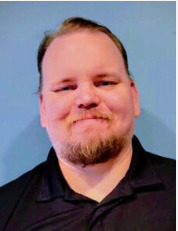
 Dan Winter
-
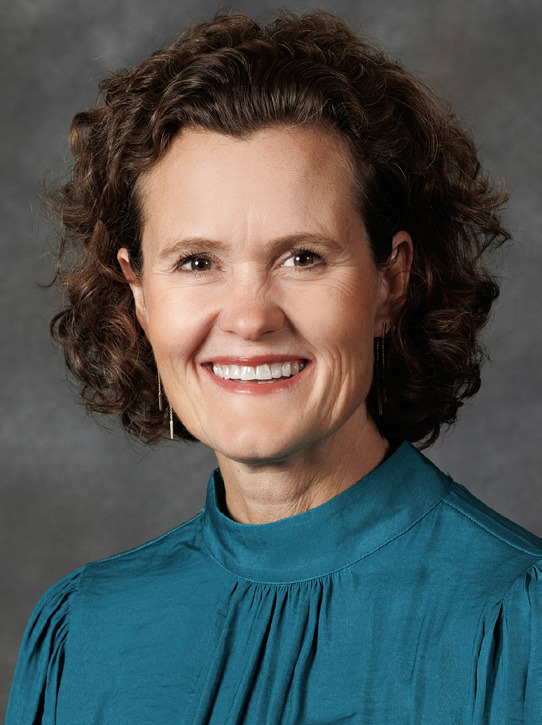
Above: Jana Hughes (left) are running for legislative representative in District 24 which includes Polk, York and Seward counties, as well as part of Butler County. Photos provided.
Editor’s Note: This interview was done by the Nebraska Examiner. We are printing some of it due to space restraints and all will be put online.
Incumbent state Sen. Jana Hughes of Seward is seeking reelection against challenger Dan Winter of Bradshaw.
Legislative District 24, in southeast Nebraska, includes Polk, Seward and York counties and a western portion of Butler County. The term is for 4 years with a $12,000 salary.
The responses below include candidates’ responses to questions ahead of the May 12 primary.
About the candidates:
Jana Hughes of Seward, 55, is the state senator for Legislative District 24 (2023-present) and an exercise instructor and substitute teacher. She served on the Seward Public Schools Board of Education (2019-22). She earned a bachelor’s degree in industrial engineering from Texas A&M University. She is a registered Republican.
Daniel P. Winter of Bradshaw, 37, is a farmer. He earned a bachelor’s degree in anthropology from the University of Wyoming. He is a registered nonpartisan.
Reason for running: What should voters know about you and why you are running for this position? What is one interesting fact about yourself?
Hughes: I am running because I feel I have learned so much these last four years, and I think I can be even more effective these next four years if I am reelected. I am very proud of my bills that I have gotten across the finish line. The prescription drug donation program that we are now partnering with Iowa on is such a good thing for Nebraskans and will actually save the state money. I want to get a few more of those “wins” for Nebraska. That’s why I ran in the first place! Fun Fact: I sewed my senior year prom dress and through 4-H entered it in the Seward County Fair.
Winter: I am running for Nebraska State Legislative District 24 as an independent for one major reason: Democracy requires a choice. No election can be considered true unless there is at least another option.
What issues would you prioritize if elected (or reelected), and why?
Hughes: I will prioritize how we fund our schools, which affects property tax. I have brought a school funding bill my last three years and I feel like I’m very close to making some positive changes with that. I really would like to get levies across school districts closer together. I also want to make sure our “tax credits” count. When we get compared to other states, the metrics do not take into account our tax credits, so it always shows us as one of the highest property tax asking states. I’d like to take the credits and “buy” down our levies. I would also prioritize growth in our state. We need to encourage economic development. We also need to do a better job at marketing Nebraska. Our state has a lot to offer families: affordable living, top-tier schools, communities that care about their neighbors, safe neighborhoods, family-friendly living, cheap and reliable energy — thanks 100% public power — and clean and abundant groundwater.
Winter: My major priorities if elected will be education and communication. As a society, we need to set a standard level of education and be sure most students are at least capable of that. For communications, as a mostly rural state, Nebraska needs to create stronger relays so there are no dead spots.
What steps would you take to stabilize Nebraska's budget after multiple years of projected shortfalls? What should the state emphasize and/or deemphasize in state spending? How can the state government step up to generate new revenue?
Hughes: I think we have to really look at some structural changes. The last session it was really “moving money around” from different cash locations. I do not think a blanket percent cut across the board is the right way to do this. There are some services that the government is responsible for — like the DMV — we require driver’s licenses to drive and vote. The government has to provide the resources to be able to get those licenses. If we ask an agency to make a certain percent cut — then we need to dictate to them what services they should cut. One way the state can step up to generate new revenue is to sales tax more items. When I started in 2023, all I heard was that we needed to match Iowa on their income tax. Well, we did that but yet we don’t match Iowa on what is sales taxed. Iowa sales taxes many more items. In fact ALL the states around us sales tax more items. Nebraska needs to eliminate the many tax exclusions that have been given over the years.
Winter: The current administration has called for overarching cuts to the budget; this policy I think is simplistic and does not create any revenue. A better policy would be to focus what budget the state has into three categories: childcare/education, innovation/entrepreneurship and infrastructure. Children are the future of this state. By focusing funds on childcare and education, Nebraska can draw new and younger residents. With better childcare, parents and guardians may be able to find better jobs or begin education for skills. This in turn could lead to more native innovation and entrepreneurship that, with support, could create new industries providing new revenue opportunities. Finally, by investing in Nebraska's infrastructure, the government can create an environment to support new and existing industry.
What spending would you prioritize in the Legislature and why? What spending do you think the state could cut and why?
Hughes: The areas that Nebraska needs to keep investing in are these: infrastructure, public safety, quality schools, workforce supports — affordable housing and child care. Things we can do to save Nebraska money: Identify areas where we can cut unneeded steps/paperwork — across all agencies. We need to become more efficient in what we deliver as a state. Identify areas where we can become more efficient with staffing — perhaps merging roles or sharing administration across agencies, counties or schools. Set automatic sunsets on tax credits and tax exemptions — maybe every 7 years or so. Revisit these items to see if they are still relevant to receive the credit or exemption.
Winter: Nebraska spending is focused mostly on conglomerates, giving them tax breaks and not getting anything in return. This needs to change. We also have bloat in administration and bureaucracy in all aspects of government.
What specifically should be done to address Nebraska property taxes? What changes do you support to Nebraska's sales tax, such as in the statewide rate or in what is or isn't taxed? What should be done, if anything, with Nebraska's income tax rates?
Hughes: We have done a lot with property tax over the last several years. Just seven years ago, the state paid 30-35% of the school costs and the locals 50-55% — now that has flipped to where the state is covering 50-55%. That is a good thing and we need to keep that state funding to our schools. I think on sales tax we can broaden the base and tax more items that currently are exempted. I believe we can expand the base enough that we would not have to increase the statewide rate of 5.5%. As far as income tax goes — we should not have accelerated getting to 3.99% by next year — we should have put triggers in place so when the state hits a certain financial amount the rate would drop a set amount. However, we can’t change the past, and in 2027 we hit the 3.99%. Right now we need to hit that next year and see going forward what effect it has on the state budget.
Winter: For most of my adult life, Nebraska governors and senators have run based on lowering property taxes; they have not done it. With the current state revenue shortfalls, I think lowering property taxes will not happen in the next four years. Gov. Pillen has suggested the removal of sales tax exemptions linked to professional services, while protecting food, human medicine, community services and agriculture inputs. This plan would put taxes on items such as pop and candy (consumption tax), home and vehicle repair, professional services, personal care, pet care, entertainment, industrial and heavy equipment, and end-of-life services. While these new taxes would fill the budget shortfall, these taxes would also decrease Nebraskan’s buying power for common goods. I would suggest a simple increase to the state’s sales tax to 6%, generating $223.5 million. This change could help to close the current funding gap, but our tax code also needs to be updated. Currently, anyone making over $29,000 is in the same income bracket, meaning I am in the same bracket as Warren Buffett or Walmart paying 4.55% in 2026. A simple solution is to create more tax brackets above the current top. Based off the average household income in Nebraska ($74,000), the new middle bracket paying the 2027 lowered tax of 3.99% should cover $29,000 to $38,999 for an individual. The next bracket at the current rate is 4.55% ($39,000 to $49,999) and the top tax bracket at 5% ($50,000 and up).
What state policies would you support, continue or champion to improve Nebraska's economy and help with affordability for Nebraskans? Name at least one policy you believe is working in this area.
Hughes: Last session we eliminated the sunset on the childcare tax credit. That is a direct help with affordability for Nebraskans that are paying for childcare. I also think that Nebraska has to “show we’re open to business.” We keep taking bites at removing red tape and we need to continue those efforts so that businesses want to come here to build because it’s a smoother process.
Winter: There are three policies that I think can set Nebraska up for future success, the ImagiNE Nebraska Act (ImagiNE) and the Nebraska Teacher Apprenticeship Program (NETAP). A third policy that the state should end is the Nebraska Advantage program, as ImagiNE has replaced it. The ImagiNE act provides corporations that qualify with tax breaks and incentives for creating jobs for Nebraskans; this is a great goal. However, the “eight tier application pathways” used by the Department of Economic Development need to be updated, specifically those pathways associated with Economic Redevelopment Areas and Modernization. For those businesses applying in Economic Redevelopment Areas, the corporation should need to create more than five full-time jobs. Modernization pathway the applicants are required to make $50 million in updates to qualify. The second policy I think can help Nebraska is NETAP, filling the gaps currently hindering educational outcomes while also allowing apprentices to continue working. Any investment in education and childcare can create greater economic growth.
What should the Legislature do to protect Nebraska's natural resources, including land and water? Should the Legislature pass any legislation to further regulate or ban data centers in Nebraska? Why or why not?
Hughes: We already passed some good laws like reporting requirements of data centers. The biggest thing is to make sure that a data center isn’t wasting or over using our water. We can require them to use closed-loop systems (or something similar) and require that any additional energy that is needed is paid for by the data center and does not fall on the backs of the rate payers. We should not use Nebraska tax dollars for incentives for data centers. Nebraska’s incentive is our reliable and affordable energy.
Winter: Nebraska is tied to nature in a way that requires its preservation, so that our agriculture industry can thrive. In the state we use approximately 5 trillion gallons of water a year for agriculture. Since 2014, the Upper Big Blue Natural Resources District has required farmers to install water flowmeters on irrigation wells. A hyperscale data center using traditional cooling systems uses approximately 1.8 billion gallons of water, while closed-loop cooling systems use 95% less water (around 100,000 gallons). Closed-loop systems use less water overall, but they also require more power to run fans, for midsize about 10 megawatts and hyperscale 1 gigawatt (about three times the average load of Lincoln). The power and water usage of data centers is dependent on the climate; Nebraska has been warming since 2000. We average about 42 days above 90 degrees, which would require more power and water to keep data centers cool. With this information in mind, I would propose three regulations. First, data centers must pay for the infrastructure they require to function and they must use renewable energy when possible. Second, data centers must have flowmeters installed and we should charge 1 to 3 cents for every gallon of water used. Finally, a requirement should be in place for job creation.
Do you support changes to legislative procedure around filibusters and the 33-vote threshold needed to move forward on certain legislation?
Hughes: No. We should keep the 33-vote threshold. Many people that want this changed are thinking of it as a partisan issue, but the “minority” could be any group, and at top of my mind is that we keep losing “rural” or “greater Nebraska” senators because the population of Nebraska is moving to Lincoln/Omaha areas. One of these days the rural senators are potentially going to need to filibuster something and we hardly have 17 rural senators right now.
Winter: I can agree to 30-vote threshold making the filibuster only needing a 60% vote to be overcome, instead of the current 67%, putting it in line with the U.S. Senate.
What do you see as the role of the Legislature in implementing or changing voter-approved laws?
Hughes: There will always be nuance and detail that the Legislature will have to add or change on ballot measures. With our single subject requirement, it is hard to have all the pieces needed on the ballot for a complicated initiative.
Winter: The Legislature’s role in ballot measures is to focus on the implementation of the ballot measure. There should be no changes to the meaning behind the measure.
What local concerns or issues have you heard from constituents that need to be addressed and why?
Hughes: Constituents are concerned about affordability right now. Prices are high on almost everything. There is concern about the agriculture industry and how long this downturn is going to last.
Winter: The local issues are property taxes and communications. By addressing the administration bloat and incentivizing better networks could fix these issues.
What is one thing that makes you stand out as the right person for the job?
Hughes: If this question was asked of other people I would hope they would say that Jana is the right person for the job because when she commits to something, she is “all in.” She listens to all sides of an issue and works very hard to get data and information about the issue before voting. She also introduces and fights for legislation that is good for all Nebraskans.
Winter: I am most likely not the right person for the job, but I have never taken on a job lightly. I will do the research and find the answers that every one of my constituents needs. I will attempt to parley with the rest of the government so that generations of Nebraskans can be proud and experience “the Good Life.”
The full article can be found here: https://nebraskaexaminer.com: qcjjFBmGLQg