
 William H. Norton, Jr.
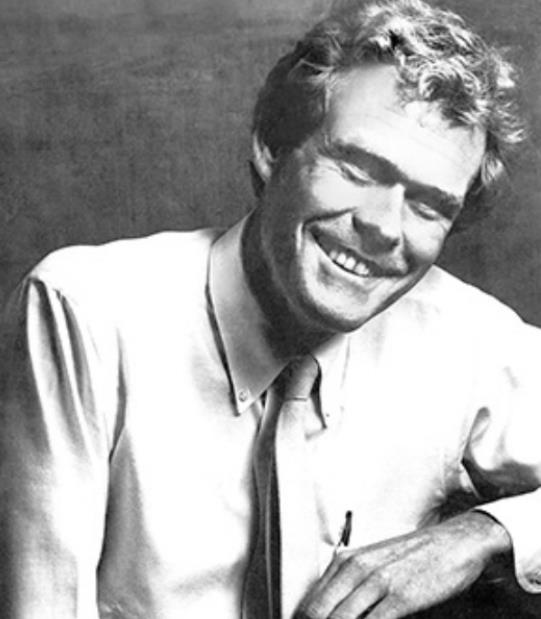
William Hayden Norton, Jr. (Bill Norton, or “Billy”, as he is known to his oldest friends) took his last breath on February 22, 2022 at the Med. Center in Omaha, Nebraska in the arms of his sister.
Bill was born October 8, 1953, in Osceola, Nebraska, the son of Nancy Rogers Sayre and William Hayden Norton.
He is preceded in death by his grandparents Dale Burdette and Helen Lucille (Cily) Rogers Sayre, and William Wendell and Catherine Eleanor (Honey) Hayden Norton; his great-aunts and -uncles Evelyn Maurine Norton and Harold Wayne (Abe) Lincoln, and Josephine Hayden and Elgin (Bing) Ingram; both of his parents, Nancy and Bill; and his wife Madeline Aper.
During his career as a New York artist, Norton served as Creative Director of the interactive group at the advertising firm of Ogilvy & Mather.
As an internet pioneer, Norton worked with both teletext and videotext; technology historians now call “the internet before the internet.” In the beginning, he hand drew images, then translated those images into dots of light (pixels) on a television screen. This was before the Mac had been created and before images could be digitized.
Norton attended public school in Osceola, Nebraska. Upon graduation in 1971, he entered the Kansas City Art Institute. He earned dual degrees in history and art from the University of Nebraska. After graduation he worked in the U.S. Senate in Washington, D.C., while continuing his study of art at the Corcoran School of Art, earning another degree from that institution. While at the Corcoran, Norton
While at the Corcoran, Norton saw a note posted on a bulletin board seeking an unpaid intern for an experimental project at the PBS television station WETA. Norton interviewed, and was asked to come back and play on their computer. He did, and as he later said, “I found it extraordinarily fascinating.”
WETA asked Norton to be their artist on the new project, which was one of the first U.S. field trials of graphic, broadcast TV teletext. Using a Canadian platform called Telidon, information was embedded in the TV signal and displayed by a special set-top box. It was on Telidon that Norton became one of the first American artists making images out of light to accompany text on a screen. Collaborating with WETA staff and Red Burns from New York University, who commuted to Washington for the WETA project, Norton helped define the future of digital interactive media.
In 1983, the WETA trial ended, as did Norton’s internship, but shortly, thereafter he received a phone call from Martin Nisenholtz at Ogilvy & Mather in New York. Nisenholtz asked if Bill would like to come up and interview for a job. Nisenholtz had created the cutting edge Interactive Marketing Group making Ogilvy, the first major advertising agency to establish an interactive capability. Norton became their artist.
Over the years, working with Nisenholtz and a handful of artists and business people in New York, Norton laid groundwork for the internet as we know it today.
When Norton returned to Nebraska he continued to create art—sculpture, pen and ink drawings, watercolors—which he shared with his friends, and to watch the fruits of his labors in digital advertising change the world. He is known for his visionary digital graphics; the hypnotic hex signs he painted; the Jazz mural he created on the exterior of a building in Omaha’s Little Italy; the illustrations he contributed to his sister’s St. Martin’s Press book Hawk Flies Above: Journey to the Heart of the Sandhills; and for his abiding creativity. Any time Bill held an object, his first thought was: What can I do with this? And then he would create something surprising.
No services were held. Bill asked that his ashes be spread privately at his beloved family property in the Sandhills. If memorials are considered, Bill would say: “Instead, please adopt an animal who needs a home.”
Billy Norton is survived by his sister Lisa Dale Norton who loved him more than the sun, the moon and the stars.